Women in VFX | Anelia Asparuhova
Meet the women who are inspiring the future of our industry!
Meet the women who are inspiring the future of our industry!
Inspired by the Visual Effects Society's global 'Women Who Lead' initiative, our Women in VFX series puts the spotlight on our female superheroes across our global teams, exploring the different paths they’ve taken, the challenges they’ve navigated and the experiences that have influenced their careers.
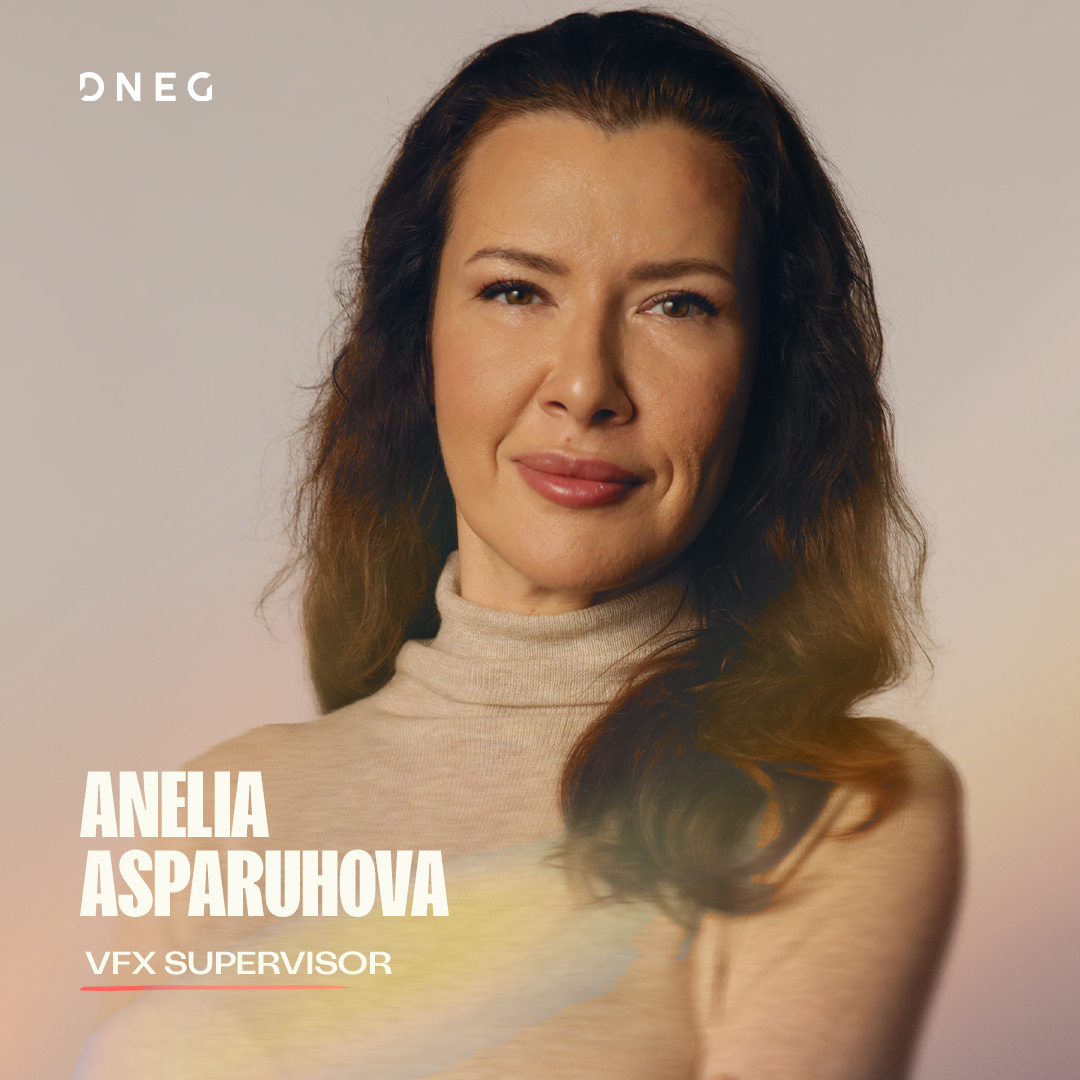
Scroll to meet Anelia Asparuhova, VFX Supervisor!
Please briefly introduce yourself and share something unique about yourself that you’d like our readers to know about you.
My name is Anelia, and I'm originally from Bulgaria. I moved to London in 2007 and have been working in the visual effects industry for 25 years. I think something that's shaped who I am professionally is that I've always had a creative streak. As a child, all my school textbooks were filled with drawings. I also discovered quite early on that I thrive on problem-solving and tackling new challenges. That combination is probably what's kept me in this industry for so long.
What originally sparked your interest in VFX, and when did you realize you wanted to pursue it professionally?
It started, rather unexpectedly, through my brother. He always knew he wanted to make video games, and from a young age he was teaching himself 3D through tutorial books. Watching him work sparked my curiosity, and I decided to give it a go myself. At the time, I was at a bit of a crossroads, I had just had an unsuccessful attempt at running a shop (selling things turned out not to be my calling!), so I spent the better part of a year at home, working through tutorials and teaching myself 3ds Max.
I knew I didn't want to work in games, so it was a choice between advertising and film. I'd always been passionate about film, so that was where my heart was. By an incredible stroke of luck, just as I started looking for work, the first American VFX studio opened in Bulgaria. They were hiring anyone with 3D skills, and that's how I got my start. They actually hired me as a 3D Animator (something I hadn't anticipated) and my very first task was animating a crocodile. It was jumping straight into the deep end, but I learned everything on the job, and that project ended up being the foundation of my entire career.
Can you pick out a key milestone or event that shaped your career path?
I've always been ambitious. Whenever I achieved something, I was immediately looking for the next thing. The pivotal moment for me came after I moved to the UK and began working in film. I'd been a generalist up until then, and had even been hired as a Senior Modeller at one studio, but I became really interested in the supervision path. At the time, most CG Supervisors came from a lighting background, so I made the deliberate decision to switch departments and go into lighting, with supervision as the long-term goal.
The moment I was first offered a promotion to Lighting Supervisor was genuinely transformative. I said yes immediately, of course, and then sat at my desk in complete shock, thinking, "What have I just signed up for?" I didn't fully grasp what the responsibilities were, but I figured it out quickly, and that leap of faith set the tone for the rest of my career.
What are the core technical skills that have been essential in your role?
I always say that to do this job well, you need to be creative and technical in equal parts. Some artists lean more one way than the other, but you genuinely need both. On the technical side, fluency with your software is essential - it's the language you use to bring your creative vision to life. When you're modelling, lighting, or texturing something, you have an image in your head of what it should look like, and the software is the tool through which you communicate that vision into reality.
Beyond that, an understanding of how all the different parts of the pipeline connect, and how your work fits into the larger picture is crucial, especially as you progress in the industry.
How has your technical skillset evolved as you progressed in your career?
As an artist, your focus is primarily on mastering the software and techniques needed for your specific part of the pipeline. As you move into supervision, that shifts quite dramatically. You're no longer just working within a tool, but you're actively evaluating software, exploring new technologies, and finding technical solutions to meet the needs of each project.
Every project is different, and each one comes with its own set of challenges and requirements. The role becomes much more about having a bird's-eye view of the entire production, identifying where the technical hurdles will be, and working out how to solve them.
What challenges (or mistakes) in your career have taught you the most, and how did you navigate them?
The biggest thing I've had to learn is how to manage stress. VFX is an inherently demanding industry. The projects are complex, the deadlines are tight, and there's always a tension between the creative desire to make something look even better and the practical realities of time and budget. Early in my career, that pressure could feel overwhelming. But over time, I've learned that the most important thing is to stay calm, not panic, and focus on building a clear plan. As a supervisor, my responsibility is to keep sight of the bigger picture, even when the details feel urgent. I've also had to learn the art of delegation, which doesn't come naturally to most people, it's something you actively have to practise and develop. Trusting your team and stepping back from the minutiae is essential if you want to lead effectively.
What has been a defining moment that significantly changed your perspective or career direction?
Rather than one dramatic defining moment, my perspective has shifted gradually over time. Little by little, I've come to understand the importance of managing my own stress, and trusting the process. You learn that losing your head over a project doesn't help anyone. What helps is staying calm, focused, and methodically working through whatever needs to be done.
How do you balance creative vision with technical and production constraints on a project?
Honestly, it takes a village. As a VFX Supervisor, you're not doing it all yourself, and you shouldn't try to. My focus is primarily on shaping the creative vision and making sure the director's or client's vision is faithfully reflected in our work. But I lean heavily on the people around me: the CG Supervisor on the technical side, and the Producer takes care of the production challenges.
The way I see my role is to make sure all these people are aligned and working as one team toward the same vision. I set the creative direction, then work closely with the CG Supervisor and Producer to identify the challenges, structure the work accordingly, and find the best way forward. It's a collaborative process, and the balance comes from trusting the expertise of everyone around you.
What does leadership mean to you in a VFX context, and how do you support your teams?
For me, leadership is about setting a clear vision and a plan to execute it, while also having the flexibility to adjust when things don't go as expected. My job is to make sure everyone on my team can do their work without disruption, and that they have what they need to succeed.
Equally important, though, is making sure people feel genuine ownership over their work. I actively involve my team in decision-making and the creative process wherever possible. We're really fortunate in VFX to work with incredibly passionate and talented artists, and I think it's so important that everyone on a project feels they've meaningfully contributed to the final result.
What skills do you think will be most valuable in the next decade?
People skills, without a doubt. Regardless of which career path you take, the ability to work collaboratively and communicate well with others is invaluable, and I don't see that changing.
On top of that, adaptability and curiosity will be more important than ever. Technology moves at lightning speed in our industry. I've been in it for 25 years, and the landscape has transformed beyond recognition. Every year brings something new, something exciting, something that requires you to rethink how you work. Keeping an open mind and staying engaged with what's emerging is essential. It's what separates people who stay relevant from those who get left behind.
What is your favourite project you have worked on and why?
I can't really pick favourites. I tend to fall in love with every project I work on. Each one brings its own creative or technical challenge, and that's what makes it special. What I really love is the journey — taking something from a blank slate, watching it come to life, solving problems along the way, and finally delivering it. That process is what I find most rewarding, and it's the same magic every time, regardless of the project.
If you could go back in time, what advice would you give your younger self?
Don't stress so much. The pressure and the desire to prove yourself can be so consuming early in your career, but the truth is, if you focus on doing good work, stay calm, and keep learning, everything else tends to fall into place. Trust the process, and trust yourself.
What kind of mindset helps women succeed or stand out in VFX technical roles?
I think the mindset that helps most is, perhaps counterintuitively, not to focus on being a woman at all. I've seen people get in their own way by worrying too much about how they're perceived, and that anxiety comes through in their energy, people can sense it. What stands out and what gets valued is focus on the work: doing the job as well as possible, rising to the challenges the project throws at you, and letting the quality of your work speak for itself.
My own experience has been that I've never genuinely felt held back because I'm a woman. I can only speak for myself, of course - others may have had different experiences, but for me the most powerful thing has been to pour my energy into the craft rather than into the perception.
What impact do you hope your career has on the next generation?
The reality is that there are still far fewer women than men in the VFX industry, particularly in senior technical and supervisory roles. Initiatives like this interview exist because there's genuine value in giving women in the industry more visibility, and I really hope that visibility inspires more women to pursue this path.
My hope is that my career can serve as a small piece of evidence that it's absolutely possible to reach VFX supervision as a woman. I've never personally experienced a glass ceiling. Yes, I've been turned down for roles, but looking back, those were usually roles that weren't the right fit for me, not because of my gender. I'd love for other women to see what I've achieved and recognise that the same is genuinely open to them. Whatever position you aspire to in VFX, it's possible.
Thank you, Anelia!